Become Hard To Replace™.
Build the strength to carry responsibility, the ability to create meaningful value, and the trust to be counted on when it matters most.
What people say about this work.
“This talk forced us to stop making excuses and take ownership.”
“We left with a clear standard: be hard to replace in how you show up.”
“Justin gives you a standard for accountability you can actually live up to.”
Talent is common. Being counted on is not.
Most organizations do not have a talent shortage. They have an ownership shortage.
The capability is already in the building. What is missing is the person who picks up the problem before it is assigned, holds the standard when no one is checking, and finishes what they said they would finish.
So responsibility drifts upward. Managers absorb work that should have been carried by the people closest to it. Standards get explained again and again instead of being met. Training generates enthusiasm on Friday and nothing measurable by the following Thursday.
Potential gets attention. Usefulness earns trust.
For the individual
You have ability. You may even have ambition. But ability that never converts into something useful for other people stays invisible. Invisible is easy to replace.
For the leader
You are carrying weight that belongs to the team. Every accountability conversation costs you something, and the standard resets the moment you stop watching.
For the organization
You are paying for potential and receiving inconsistency. Execution depends on a handful of reliable people, and everyone knows exactly who they are.
Become Strong. Become Useful. Become Hard To Replace™.
Three stages, in order. Each one is built on the last, and none of them can be skipped.
Become Strong
Develop the capacity to carry responsibility and stay capable under pressure. Strength here is not display. It is load-bearing: physical, mental, financial, and relational capacity built on purpose.
Become Useful
Convert potential, knowledge, and skill into meaningful value for other people. Usefulness is what turns private capability into something an organization can actually count on.
Become Hard To Replace™
Become consistently capable, reliable, and trustworthy, and make the people and systems around you stronger in the process. This is the point where your contribution creates a difference people can name.
Strength is not what you can display. It is what you can carry.
What Hard To Replace™ is not.
If the organization breaks when you step away, you did not become valuable. You became a liability.
It is not hoarding knowledge. It is not making yourself the bottleneck. It is not job security through obscurity, and it is not building a role no one else can survive.
That is not value. That is risk. Every experienced leader can spot it.
The genuinely hard-to-replace person does the opposite. They document what they know. They train the person behind them. They raise the standard so the standard outlives them. They leave the team stronger than they found it.
The people who are hardest to replace make everything around them stronger.
The people who are hardest to replace make everything around them stronger.
The behavior underneath the outcome.
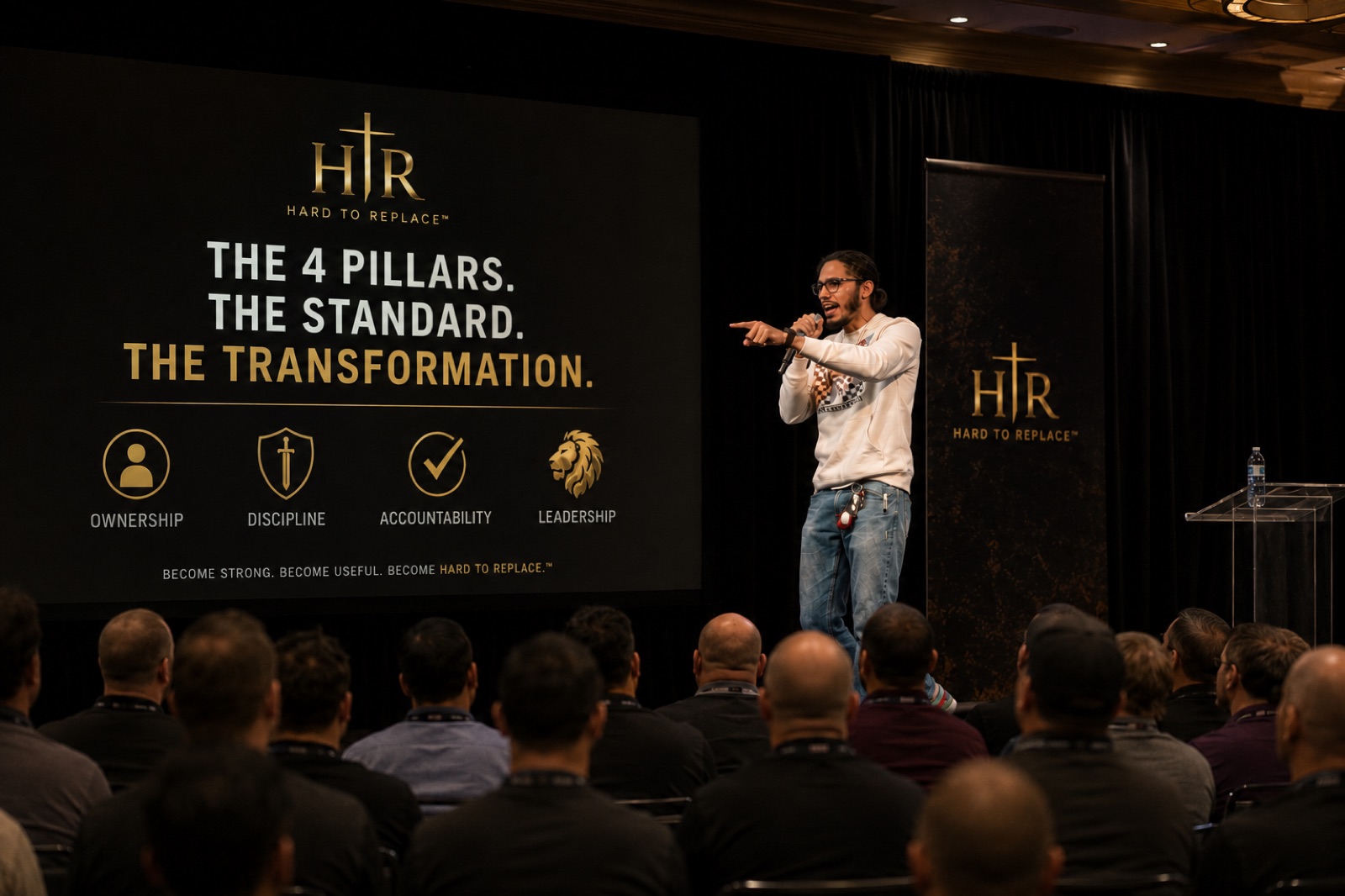
Every part of this work — the book, the keynote, the workshop, the course — is built on the same four pillars.
Ownership
Take responsibility for every decision, every result, and every opportunity.
Discipline
Create habits that produce consistency when motivation disappears.
Accountability
Build trust by aligning your actions with your standards every day.
Leadership
Lead yourself first, then earn the privilege of leading others.
Body
The physical capacity to carry weight and stay steady under load.
Mind and Spirit
The judgment and conviction to decide well when it is difficult.
Relationships
The trust that makes your contribution matter to other people.
Money
The stewardship that turns earning into stability and freedom.
Where do you want to start?
Build people your team can count on.
Introduce the message, apply it in the room, and reinforce it after everyone goes back to work.
- Open with a keynote that changes how your people think about their own contribution
- Apply it in a workshop where they practice the behavior, not just hear about it
- Reinforce it with coursework, follow-up, and a shared standard that outlasts the event
Delivered to mixed rooms, whole companies, and entire student bodies. Every audience.
Explore Organizational ProgramsBecome the person who gets counted on.
Start with the philosophy, then do the work it asks of you.
- Read the book and understand what actually makes a person valuable
- Apply the four pillars to your body, mind, relationships, and money
- Use the coursework to keep the standard when motivation runs out
The Making of a High-Value Man is written for men. The coursework and the four pillars are for anyone.
Start With the Book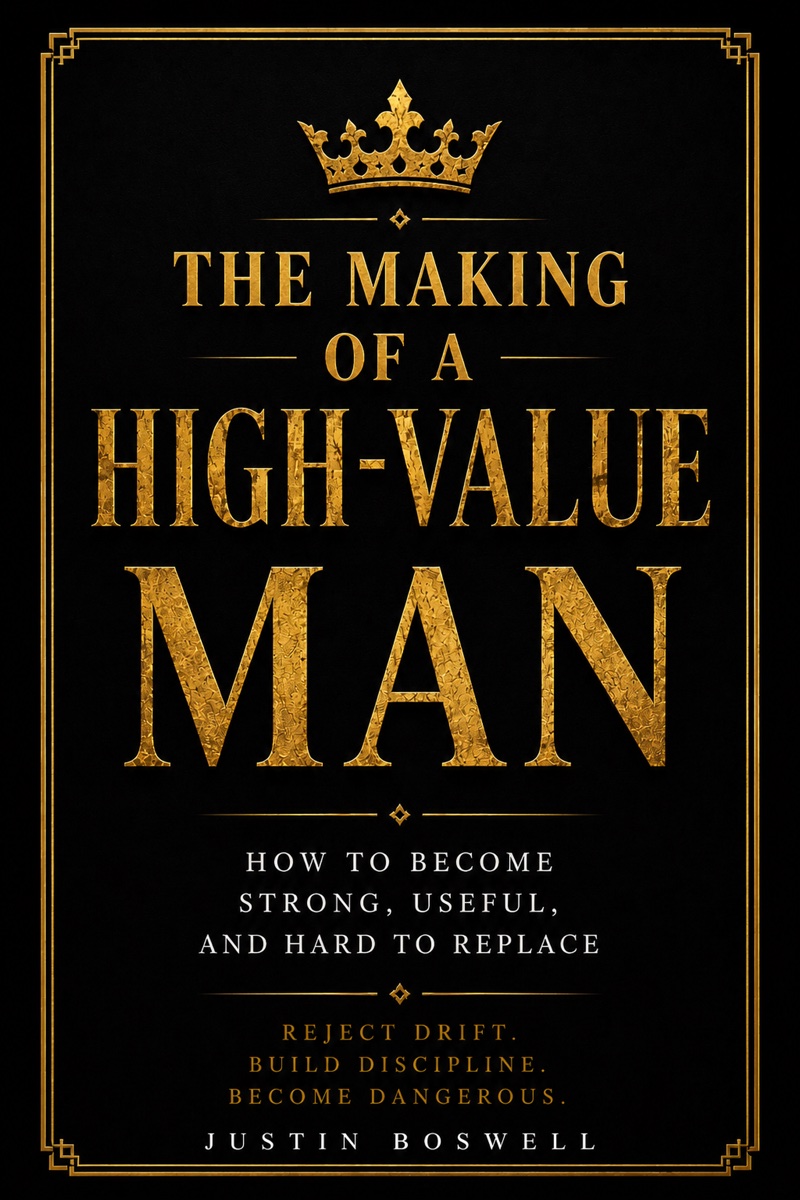
Where the philosophy is laid out in full.
Hard To Replace™ is the foundation of everything else on this site. The keynote creates belief in it. The workshop turns it into practice. The course keeps it alive over time.
But the argument itself — what makes a person genuinely valuable, and how anyone can become that on purpose — is made in the book.
What you will take from it
- A working definition of value that survives contact with a real workplace
- The four pillars — ownership, discipline, accountability, and leadership — as behavior, not vocabulary
- How to apply the same standard across your body, your mind, your relationships, and your money
- Why usefulness, not potential, is what earns trust and what it takes to convert one into the other
The message that gets the room to take responsibility.
A keynote is where belief changes. Justin's talk gives an audience a clear, honest answer to the question most of them are quietly asking: what actually makes someone valuable here — and am I that person?
No empty motivation. No fear-based messaging about job security. A direct case for becoming the kind of person an organization builds around, and a specific idea of what to do on Monday.
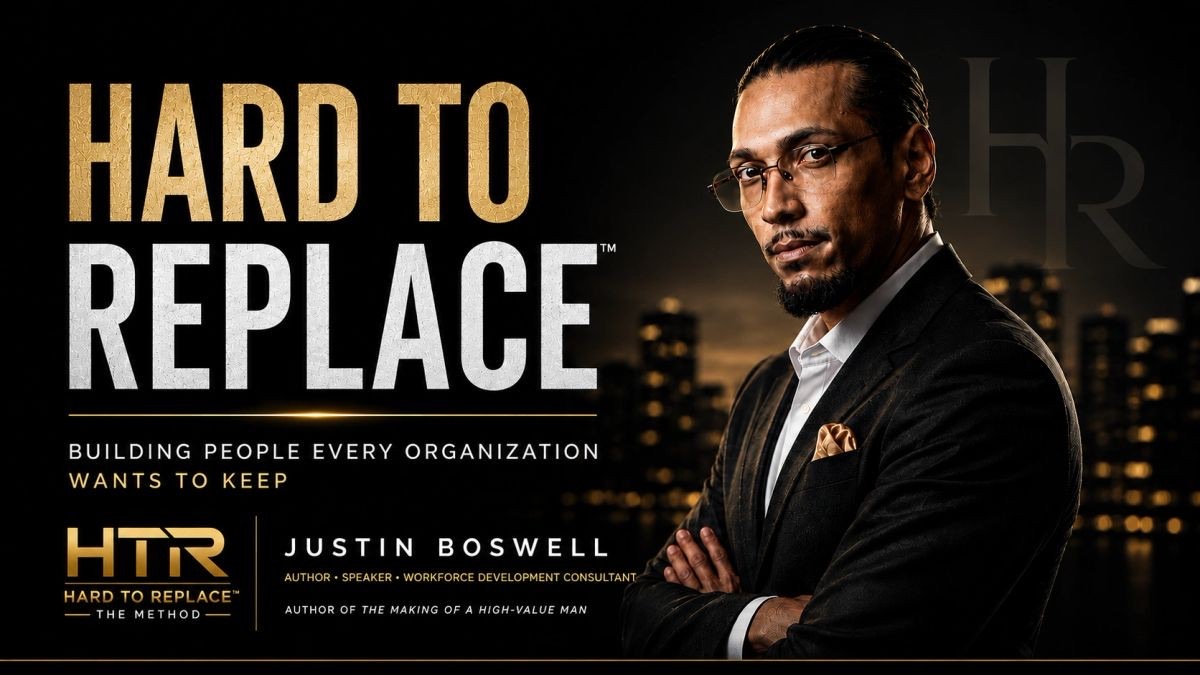
Hear him make the case.
A podcast conversation about what actually makes a person worth keeping — the same argument he brings to a stage.
Where the message becomes practice.
A keynote changes what people believe. A workshop changes what they do. This is the application layer — the session where teams assess where they actually stand, decide what they are going to own, and practice the conversations they have been avoiding.
- UnderstandEstablish what makes a person genuinely valuable
- AssessLocate where each person actually stands today
- DecideChoose the standard the team will hold
- PracticeRehearse ownership and accountability out loud
- ApplyCommit to specific action in real work
- MeasureDefine what will be checked, and when
What is not measured is easily excused.
Reinforcement, after the room empties.
Most training fails for one reason: nothing happens after the event. The coursework is the answer to that — structured lessons, exercises, and assessments that keep the standard in front of people long after the keynote and the workshop are over.
Available for individuals and for teams.
What changes when this work lands.
Stated in the terms each audience actually cares about.
Individual strength
- Clearer standards that hold when motivation is gone
- Greater capacity under pressure
- A definition of progress that is measured, not felt
Practical usefulness
- Skill converted into contribution other people can name
- Problems solved closer to where they occur
- Follow-through that no longer needs supervision
Trusted leadership
- Accountability handled as a normal conversation, not a confrontation
- Responsibility claimed instead of assigned
- Leaders who strengthen people rather than absorb their work
Organizational value
- Standards that survive a change in management
- Less rework, fewer dropped commitments
- A shared language for what good actually looks like
These are the outcomes this work is designed to produce. Where an organization wants them measured, Justin will help define what gets checked and when — before the engagement begins.
In their words.
“This talk forced us to stop making excuses and take ownership.”
“We left with a clear standard: be hard to replace in how you show up.”
“Justin gives you a standard for accountability you can actually live up to.”
Why this work exists.
Justin Boswell is the author of The Making of a High-Value Man and the creator of the Hard To Replace™ method.
His work starts from one question: what actually makes a person worth keeping? His answer is that talent is common and being counted on is not. Value shows up when someone carries responsibility without being asked, holds a standard nobody is checking, and finishes what they said they would finish.
He teaches that as behavior rather than vocabulary, built on four pillars: ownership, discipline, accountability and leadership. He works with colleges, high schools, companies and frontline teams, in keynotes, workshops and multi-session programs.
More about JustinWhat Justin believes
- Responsibility is claimed, not handed out.
- A standard that depends on your mood is not a standard.
- Strength that does not serve anyone is just self-interest with better marketing.
- The measure of a leader is whether the people around them got stronger.
Join the Hard To Replace™ List
Occasional writing on ownership, discipline, accountability, and leadership. No noise, no daily email, and you can leave whenever you want.
Build people your organization can count on.
Tell us what you are trying to change and who needs to change it. If there is a fit, you will hear back with real options — formats, availability, and what it would take.